Add push notifications to your React Native app without Firebase_
Send push notifications to an Expo app with Appwrite Push. Notify customers when an order ships, deliver on Android while the app is closed, and open the order on tap.

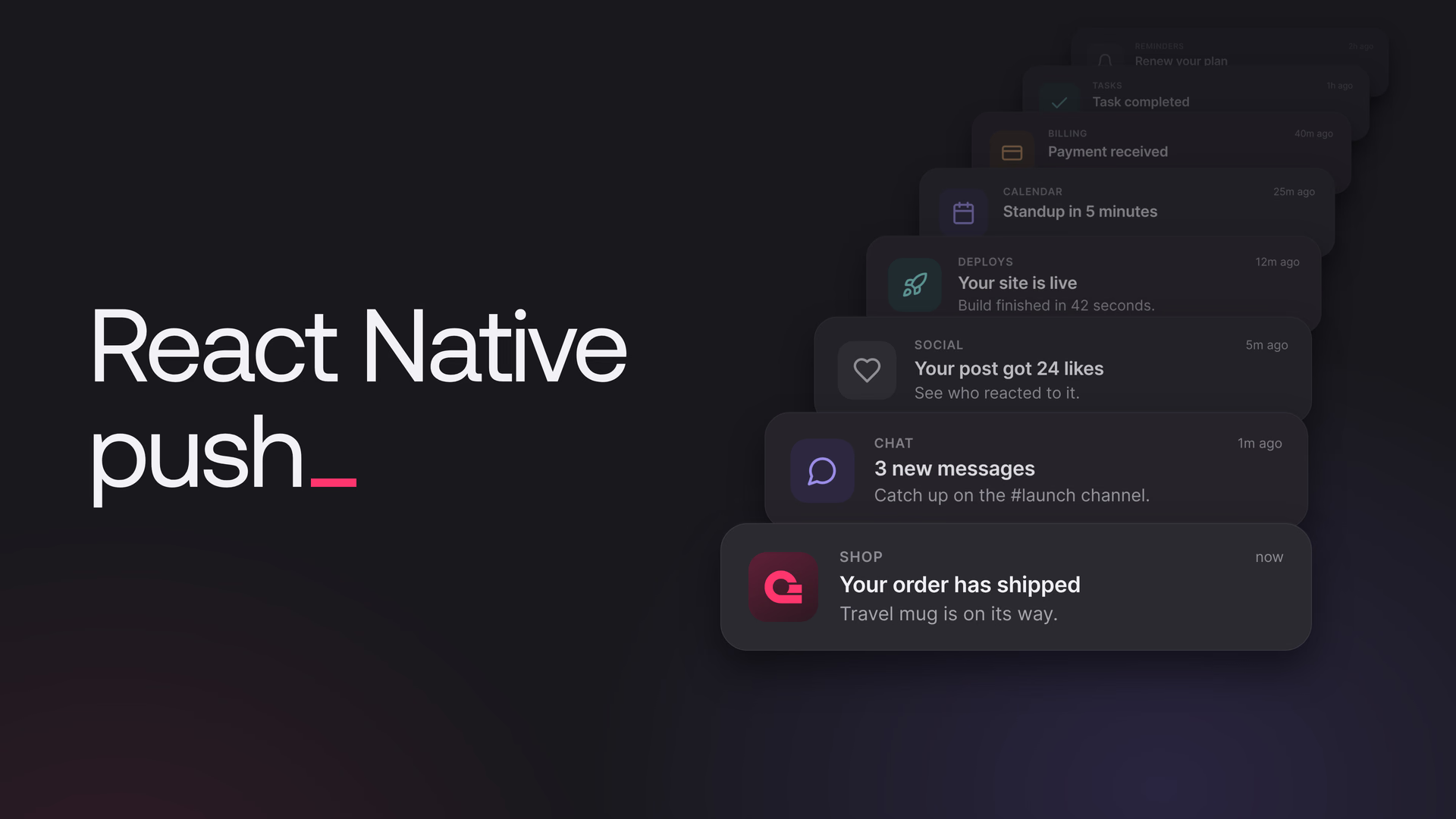
Push notifications in a React Native app usually start in Firebase: a project, a google-services.json file for Android, an APNs key for iOS, and code that collects each device's token and stores it on your server. Appwrite Push works without Firebase or tokens. The Appwrite React Native SDK keeps a connection open to Appwrite with the signed-in user's session, and a message you send to that user's ID arrives on every device they use.
This tutorial adds order notifications to an Expo app. When an order's status changes to shipped or delivered, an Appwrite Function sends the customer a notification, and tapping it opens that order. On Android, notifications arrive while the app is in the background and after Android kills its process. On iOS, they arrive while the app runs, and the ones that arrive after iOS suspends the app show up when it opens again.
Create the Appwrite Push provider
In the Console, open your project and go to Messaging > Providers > Create provider. Choose Appwrite under Push, give the provider a name, and click Create provider. Appwrite Push takes no credentials, so the provider can send as soon as it's created.
Register the app
Open Apps and click Add app. Choose Android and enter your app's package name, such as io.appwrite.orders. For iOS, add an Apple app with your bundle ID too. Appwrite only accepts requests from apps registered in the project.
Create the orders table
In Databases, create a database with the ID shop, and in it a table with the ID orders and these columns:
| Column | Type | Settings |
|---|---|---|
userId | Varchar | Size 36, required |
item | Varchar | Size 128, required |
status | Enum | Elements placed, shipped, and delivered, default placed |
In the table's settings, turn on Row security and leave the table permissions empty. Give each order a read permission for its customer, read("user:<USER_ID>"), so a customer can only list their own orders.
Install the SDK
Install the SDK with the packages it needs. react-native-tcp-socket opens the connection to Appwrite, and expo-notifications and react-native-background-actions handle notifications and taps on iOS:
npx expo install react-native-appwrite expo-file-system react-native-url-polyfill react-native-tcp-socket expo-notifications react-native-background-actions
Push uses native modules, so it doesn't run in Expo Go. Build a development build instead, with npx expo run:android or npx expo run:ios.
On Android, the SDK shows its own notifications and takes their icon from a meta-data entry in your app's manifest. The expo-notifications config plugin turns a white PNG into the notification_icon drawable. Add it to app.json together with a small plugin of your own that points the SDK at that drawable:
{
    "expo": {
        "name": "Orders",
        "android": { "package": "io.appwrite.orders" },
        "ios": { "bundleIdentifier": "io.appwrite.orders" },
        "plugins": [
            ["expo-notifications", { "icon": "./assets/notification-icon.png" }],
            "./plugins/with-appwrite-push-icon"
        ]
    }
}
Save the plugin as plugins/with-appwrite-push-icon.js:
const { AndroidConfig, withAndroidManifest } = require('expo/config-plugins');

module.exports = (config) =>
    withAndroidManifest(config, (config) => {
        const application = AndroidConfig.Manifest.getMainApplicationOrThrow(config.modResults);
        AndroidConfig.Manifest.addMetaDataItemToMainApplication(
            application,
            'io.appwrite.reactnative.push.notification_icon',
            '@drawable/notification_icon',
            'resource'
        );
        return config;
    });
Connect to Appwrite
The SDK needs the URL polyfill, so import it once in your entry file, before anything else:
import 'react-native-url-polyfill/auto';
import { registerRootComponent } from 'expo';
import App from './App';

registerRootComponent(App);
Then create one client for the whole app in lib/appwrite.ts, with your project's endpoint and ID from the Console and the package name you registered:
import { Account, Client, Push, TablesDB } from 'react-native-appwrite';

export const client = new Client()
    .setEndpoint('https://<REGION>.cloud.appwrite.io/v1')
    .setProject('<PROJECT_ID>')
    .setPlatform('io.appwrite.orders');

export const account = new Account(client);
export const tablesDB = new TablesDB(client);
export const push = new Push(client);
Subscribe after the user signs in
Push connects with the session the user signed in with, so subscribe after sign-in, and again at launch when a session already exists. Without a topic, subscribe listens for messages sent to the signed-in user:
async function loadOrders() {
    const { rows } = await tablesDB.listRows<Order>({ databaseId: 'shop', tableId: 'orders' });
    setOrders(rows);
}

async function startPush() {
    await push.subscribe((message) => {
        console.log('Push message', message.data);
        loadOrders();
    });
    await loadOrders();
}

async function signIn(email: string, password: string) {
    await account.createEmailPasswordSession({ email, password });
    setSignedIn(true);
    await startPush();
}
Called without a topic, subscribe also turns on background delivery by default. While your app is on screen, the callback receives each message and the SDK shows no notification. While it isn't, the SDK shows a system notification with the title and body you sent. On Android 13 and later, the first background subscription asks for the notification permission.
In this app, the callback reloads the order list, so a new status shows up while your user is looking at it. Row security limits the list to the signed-in customer's orders. Order is the row type, Models.Row & { userId: string; item: string; status: string }.
Open the order when a notification is tapped
getInitialNotification returns the tap that launched the app, and onNotificationOpened reports taps while the app is running. Both include the data you sent with the message. Read them when the app starts, in the same effect that restores the session:
useEffect(() => {
    // The tap that launched the app
    push.getInitialNotification().then((opened) => {
        if (opened) setOpenedOrderId(opened.data.orderId as string);
    });
    // Taps while the app is running
    const stop = push.onNotificationOpened(({ data }) => setOpenedOrderId(data.orderId as string));

    account.get().then(
        () => {
            setSignedIn(true);
            startPush();
        },
        () => setSignedIn(false),
    );

    return stop;
}, []);
When openedOrderId is set, the app shows that order. Load the row again instead of reading it from the list, because the status changed after the list loaded:
const order = await tablesDB.getRow<Order>({ databaseId: 'shop', tableId: 'orders', rowId: orderId });
Send the notification from a Function
An Appwrite Function sends the notification. It runs on every update to an order and sends a push when the new status is shipped or delivered:
import { Client, ID, Messaging } from 'node-appwrite';

const notifications = {
  shipped: {
    title: 'Your order has shipped',
    body: (order) => `${order.item} is on its way.`,
  },
  delivered: {
    title: 'Your order was delivered',
    body: (order) => `${order.item} has arrived.`,
  },
};

export default async ({ req, res, log }) => {
  const order = req.bodyJson;
  const notification = notifications[order.status];

  if (!notification) {
    return res.empty();
  }

  const client = new Client()
    .setEndpoint(process.env.APPWRITE_FUNCTION_API_ENDPOINT)
    .setProject(process.env.APPWRITE_FUNCTION_PROJECT_ID)
    .setKey(req.headers['x-appwrite-key']);

  await new Messaging(client).createPush({
    messageId: ID.unique(),
    title: notification.title,
    body: notification.body(order),
    users: [order.userId],
    data: { orderId: order.$id },
  });

  log(`Sent the ${order.status} notification for order ${order.$id}`);
  return res.empty();
};
The event payload is the updated row. users: [order.userId] reaches every device where the customer is signed in, and data comes back to the app in onNotificationOpened. The function's API key comes from the x-appwrite-key header and has only the scopes you give the function.
Save the code as functions/notify-order-status/src/main.js, with a package.json next to src that sets "type": "module" and depends on node-appwrite. Then add the function to your project's appwrite.config.json:
{
    "projectId": "<PROJECT_ID>",
    "functions": [
        {
            "$id": "notify-order-status",
            "name": "Notify order status",
            "runtime": "node-24",
            "path": "functions/notify-order-status",
            "entrypoint": "src/main.js",
            "commands": "npm install",
            "execute": [],
            "events": ["tablesdb.shop.tables.orders.rows.*.update"],
            "scopes": ["messages.write"],
            "timeout": 15
        }
    ]
}
events runs the function on every update to a row in orders, scopes lets it send messages, and an empty execute list keeps anyone from calling it directly. Deploy it with the Appwrite CLI, signed in with appwrite login:
appwrite push functions
Every update to a shipped order sends the message again. If other columns of an order change after it ships, store the last status you notified about and compare it before sending.
Try it
Run the app on an Android phone, sign in as a customer with orders, then leave the app. In the Console, change one of their orders to shipped or delivered. The notification appears with your app's icon, and tapping it opens that order. Change it while the app is open and the list updates instead.
How quickly notifications arrive
While your app is open, a message arrives within a second of the function sending it. Once the app is in the background on Android, the SDK's native module wakes it on a schedule to reconnect and show what arrived. In our tests on Android 15, background notifications arrived within 25 seconds of the order changing, also after Android killed the app's process. Messages sent while the phone was offline arrived a few seconds after it reconnected. Battery saver and Doze, the idle mode Android enters when the screen has been off for a while, can delay them by several minutes.
For instant delivery in the background on Android, turn on the SDK's foreground service while the app is on screen, for example from a settings toggle:
await push.setForeground(true);
The service shows a quiet ongoing notification and uses the remoteMessaging foreground service type, which Google Play asks you to declare. Delivery while the app is closed covers exact alarms and battery optimization, which also affect timing.
On iOS, the app keeps its connection while it runs and for a short time after the user leaves it. Once iOS suspends the app, messages wait until the app opens again, and Appwrite then replays the ones it missed. To show notifications while an iOS app is suspended, use the Appwrite Apple SDK, which reaches a suspended app through APNs.
Sign out
Close Push before you delete the session. It closes the connection and stops background delivery, so the device stops receiving the previous user's notifications:
push.close();
await account.deleteSession({ sessionId: 'current' });
Resources
Add an Appwrite Push provider to your Appwrite project, then subscribe with the Appwrite React Native SDK after the user signs in. The SDK keeps its own connection to Appwrite, so you don't add Firebase to the app or collect device tokens. A message you send with createPush to the user's ID reaches every device where they are signed in.
No. Push uses native modules, such as react-native-tcp-socket for its connection, so it needs a development or standalone build. Build one with npx expo run:android or npx expo run:ios.
On Android, yes. The SDK's native module saves the subscription and wakes the app on a schedule to reconnect, so notifications arrive after the user leaves the app and after Android kills its process. On iOS, messages arrive while the app runs and for a short time after the user leaves it. Once iOS suspends the app, they wait until the app opens again.
Send the screen's identifier in the message's data, for example an order ID. In the app, read push.getInitialNotification() at startup for the tap that launched the app, and register push.onNotificationOpened for taps while it runs. Both return the data you sent.
Appwrite keeps them for up to 7 days. When the device reconnects, it replays the newest messages it missed, up to five per topic, oldest first.