May product update: Presences API, Rust runtime, 7x faster Storage uploads, and more_
Get a full recap of everything shipped across Appwrite in May, including Presences API, Rust runtime, 7x faster Storage uploads, database improvements, Auth email policies, deployment updates, and AI tooling.

Welcome back to the product update.
May was packed with releases across Appwrite. We shipped new tools for realtime collaboration, faster file uploads, better deployment workflows, new runtimes, Auth controls, and database improvements to help you build faster and scale with more confidence.
Here is a quick overview of what we shipped:
- Presences API for online, typing, and activity states
- Rust runtime for Appwrite Functions
- Database relationships are officially out of beta
- BigInt columns for Appwrite Databases
- Up to 7x faster Storage uploads with parallel chunks
- Git deployment triggers for Functions and Sites
- Deployment retention for Functions and Sites
- Email policies for Appwrite Auth
- Bun and Deno build runtimes for Sites
- Dart 3.12 for Functions and Flutter 3.44 for Sites
- Appwrite plugin for OpenAI Codex
Let's dive in.
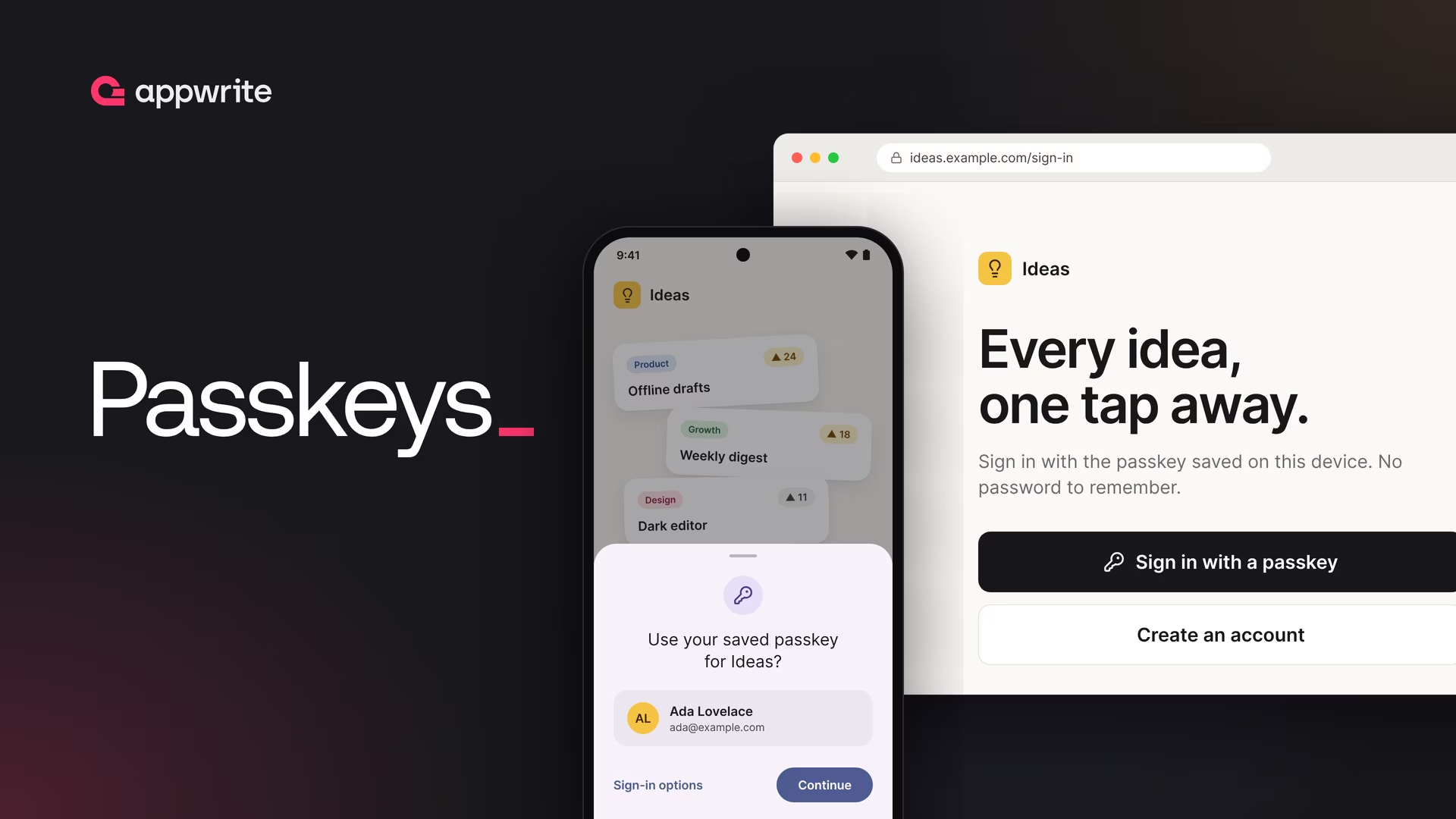
Track who is online, typing, and active with the Presences API
Appwrite now includes a Presences API for short-lived user statuses like online, away, typing, editing, or viewing.
You can use it to build online indicators, typing states, multiplayer presence, collaborative editors, live dashboards, and activity feeds.
Introducing the Rust runtime for Appwrite Functions
Appwrite Functions now supports Rust as a first-class runtime.
You can write and deploy functions in Rust, pair them with the official Appwrite Rust SDK, and use them for performance-sensitive backend workloads like webhook verification, image processing, payment flows, and data transformation.
Database relationships are officially out of beta
Database relationships in Appwrite are now production-ready across Appwrite Cloud and self-hosted deployments.
You can model connected data more easily, filter across related records, and build apps with more reliable relationship loading and improved performance.
Introducing BigInt columns
Appwrite Databases now supports 64-bit signed integers with the new BigInt column type.
BigInt is useful for large counters, external IDs, high-resolution timestamps, financial values, and any data that needs integer precision without floating-point rounding.
Up to 7x faster Storage uploads with parallel chunks
Appwrite SDKs now upload Storage file chunks in parallel.
In our Node SDK benchmark, a 1.28 GB file upload dropped from 4 minutes 44 seconds to under 40 seconds. That is a 7.10x improvement, with no API changes needed.
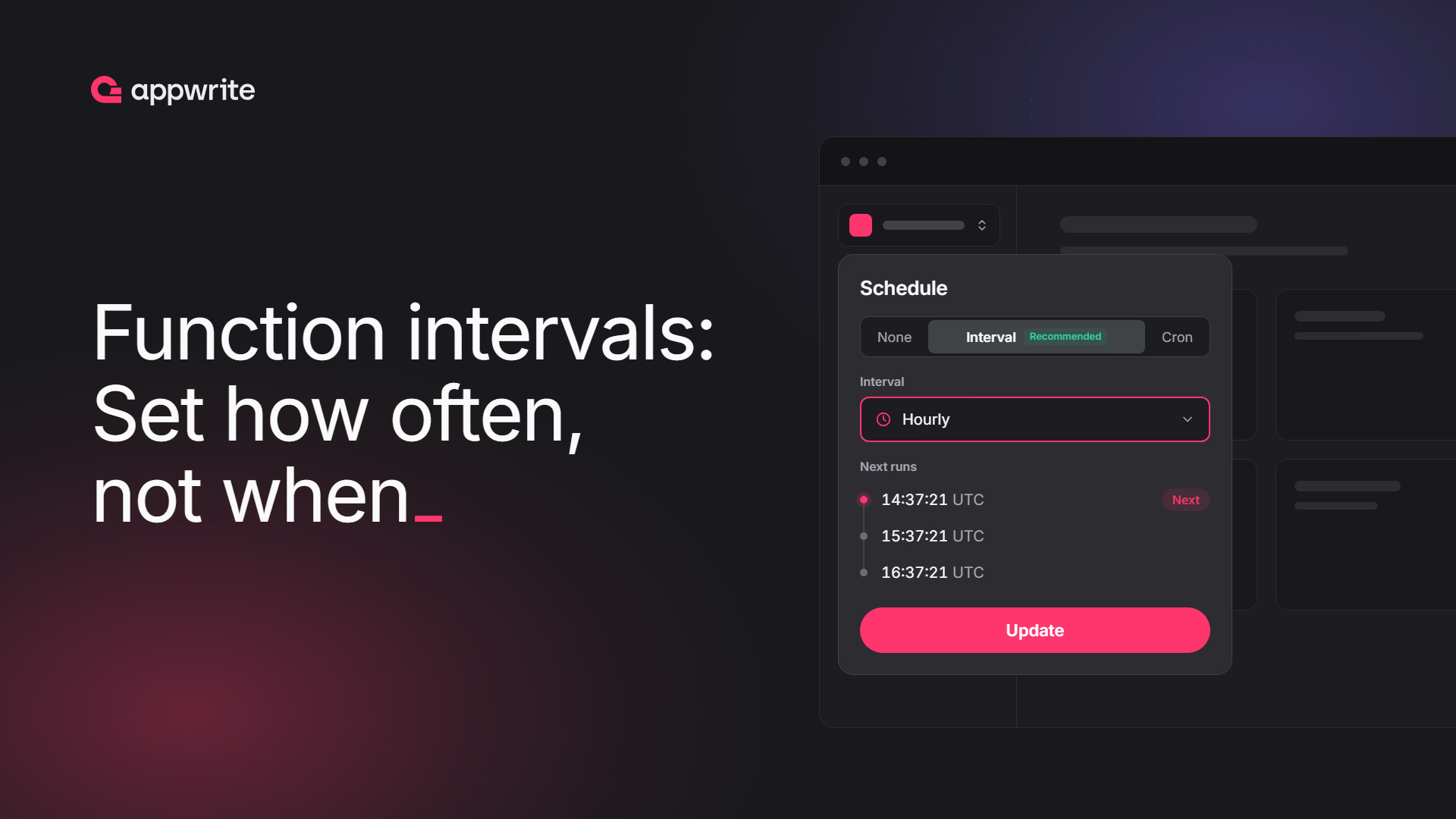
Git deployment triggers for Functions and Sites
Git deployment triggers give you more control over which changes create automatic deployments.
Use branch filters for production, staging, and preview workflows, or path filters so each Function or Site only deploys when relevant files change.
Deployment retention for Functions and Sites
Functions and Sites now support deployment retention.
You can choose how long Appwrite keeps non-active deployments before deleting them automatically. Active deployments are never deleted.
Email policies for Appwrite Auth
Appwrite Auth now supports email policies.
You can block free providers, aliased emails, disposable inboxes, or enforce provider-specific domains for user creation and email updates.
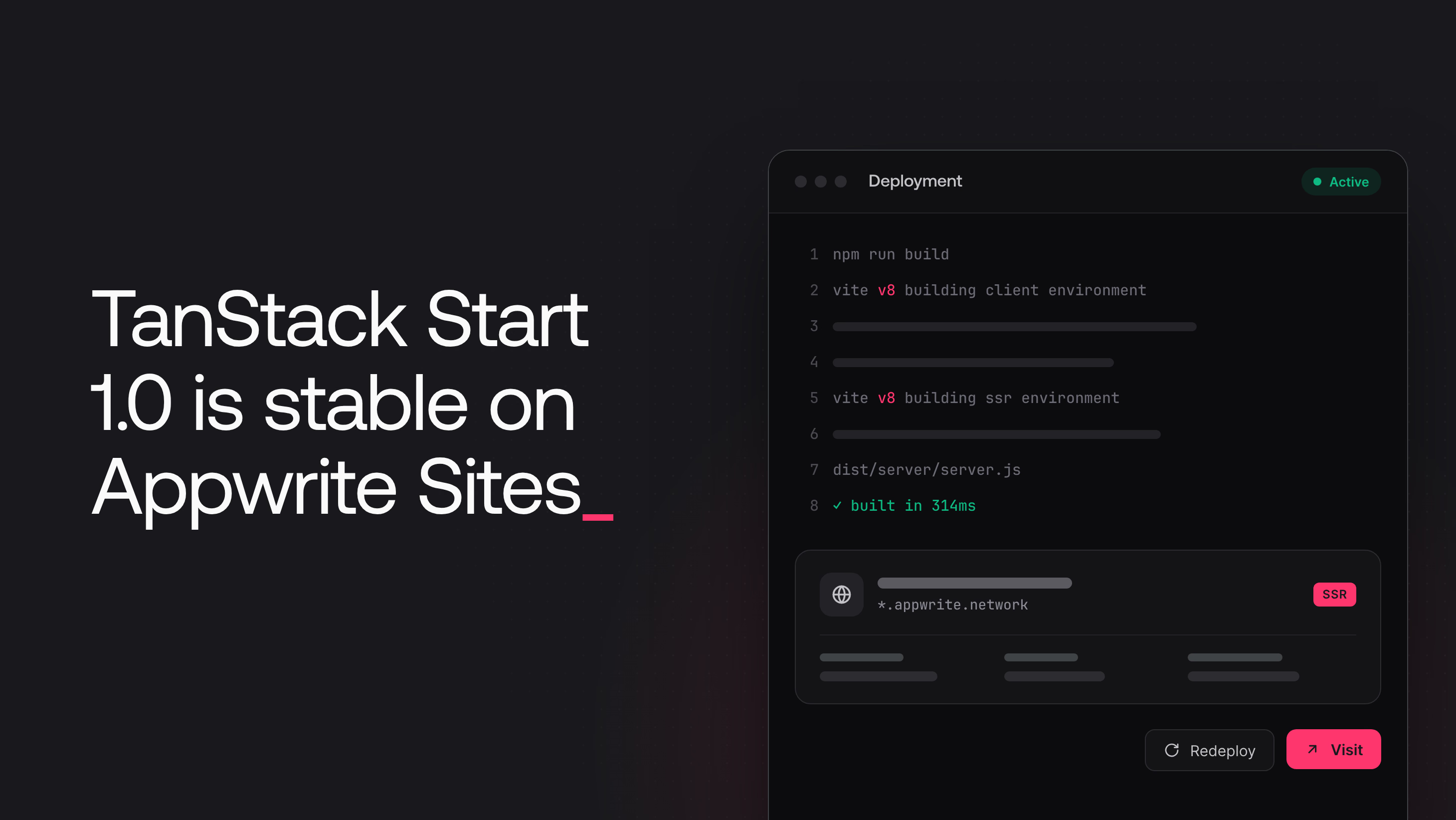
Bun and Deno build runtimes for Sites
Appwrite Sites now supports Bun and Deno as build runtimes for Node-based frameworks.
You can switch the build runtime per Site from Runtime settings and apply the change on the next deployment.
Dart 3.12 for Functions and Flutter 3.44 for Sites
Appwrite now supports Dart 3.12 as a Functions runtime and Flutter 3.44 as a build runtime for Sites.
Flutter teams can now build mobile apps, web apps, and backend functions with a more consistent Dart-based workflow.
Appwrite plugin for OpenAI Codex
The Appwrite plugin is now available for OpenAI Codex.
It includes the Appwrite Docs MCP server and agent skills for the Appwrite CLI, major SDKs, and deployment workflows for Sites and Functions.
Community Recognitions
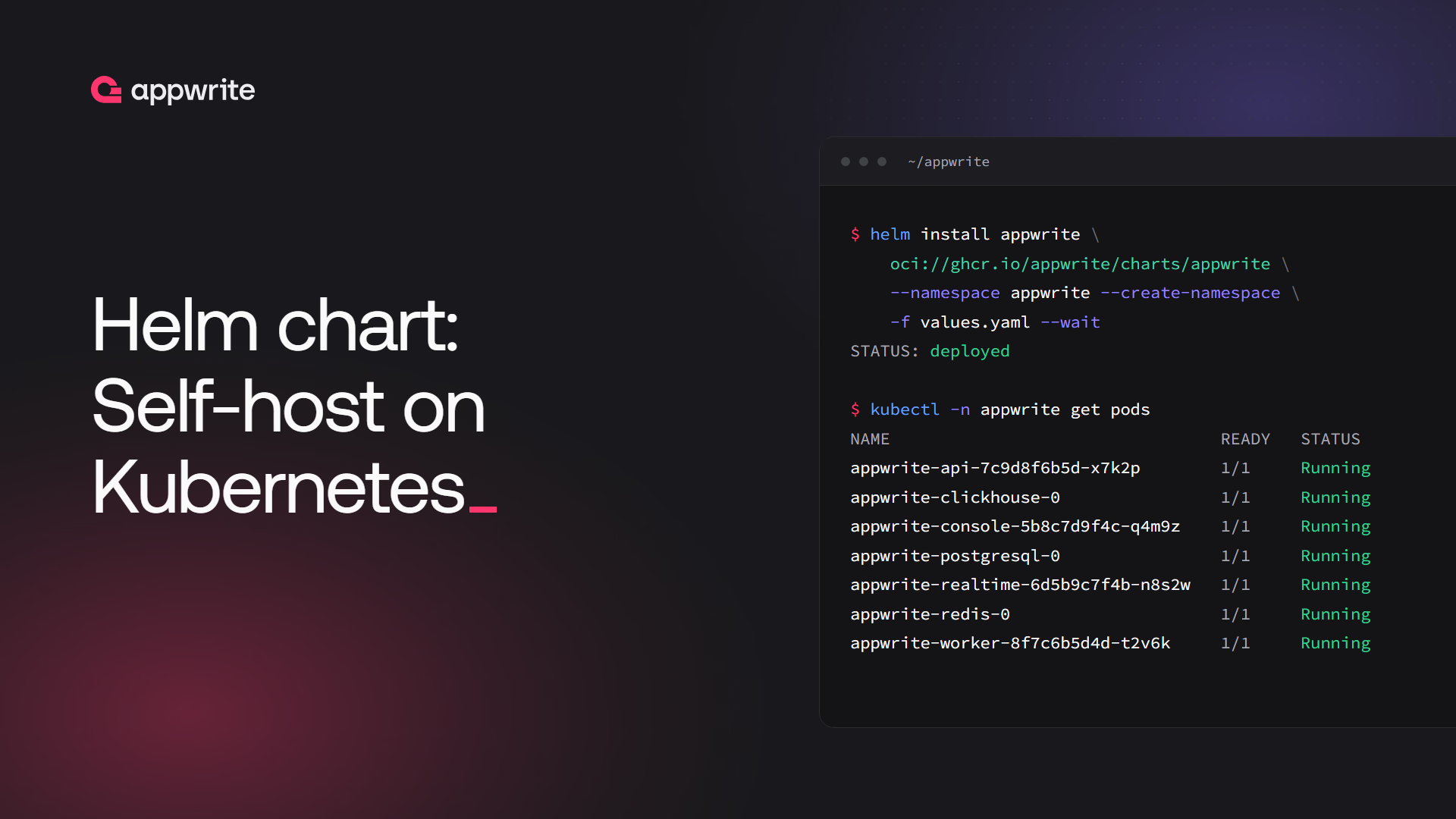
We are excited to feature Ibaraki Douji as part of our monthly Community Recognitions for May 2026. Ibaraki Douji built a full, up-to-date Helm chart for self-hosting Appwrite on Kubernetes that deploys the entire stack, including the API, Console, Realtime, background workers, schedulers, database, Redis, and Kubernetes-native ingress with TLS. It lets you scale each component independently, run clean upgrades, and fits GitOps workflows with tools like ArgoCD and Flux. It has been running in production since Appwrite 1.7.4. Keep in mind that this is a community-backed project and is not maintained by Appwrite.
If you would like to participate in next month's Community Recognitions, join our Discord server and showcase your project.
Engineering Resources
What's to come
We are continuing to improve Appwrite across realtime collaboration, deployments, performance, databases, Auth, and AI-assisted workflows.
Follow us on X and check our Changelog regularly, as we will release more information in the coming weeks.
The Presences API lets developers track short-lived user activity states such as online, away, typing, editing, or viewing. It can be used to build online indicators, typing states, collaborative editors, multiplayer features, live dashboards, and activity feeds.
Yes. Appwrite Functions now supports Rust as a first-class runtime. Developers can write and deploy backend functions in Rust and use them for workloads such as webhook verification, image processing, payment flows, and data transformation.
Appwrite SDKs now support parallel chunk uploads for Storage. In a Node SDK benchmark, a 1.28 GB file upload improved from 4 minutes 44 seconds to under 40 seconds, reaching a 7.10x improvement with no API changes needed.
Yes. Database relationships are officially out of beta and production-ready across Appwrite Cloud and self-hosted deployments. They help developers model connected data, filter across related records, and load related data more reliably.
Yes. The Appwrite plugin for OpenAI Codex includes the Appwrite Docs MCP server and agent skills for the Appwrite CLI, major SDKs, and deployment workflows for Sites and Functions.