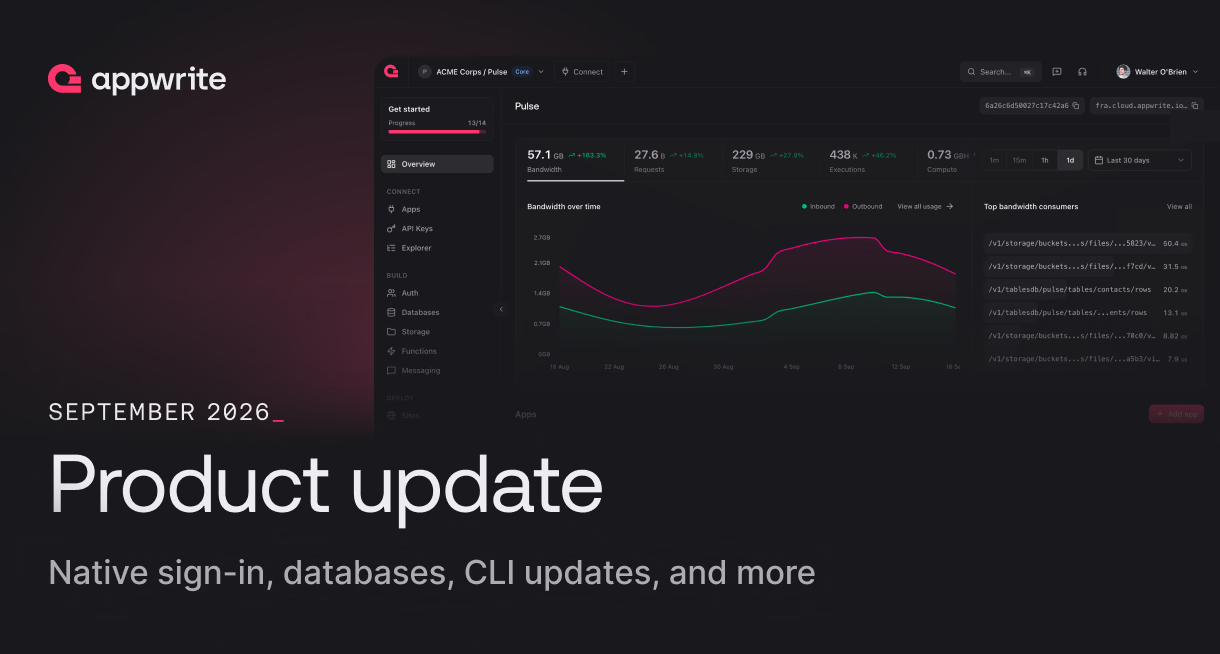
September product update: Native sign-in, databases and more

See what's new in Appwrite with native sign-in, databases across all regions, Resend setup, user photos, CLI config files, and more.
5 min read
See what's new in Appwrite with native sign-in, databases across all regions, Resend setup, user photos, CLI config files, and more.
Claude Sonnet 5.5 costs up to 30% less per task and improves coding, agentic work, and everyday tasks at the same Sonnet 5 pricing.
OpenAI launches GPT-6 Sol and Luna with stronger coding, factuality, and agent performance, plus 50% lower API prices than GPT-5.6.
Claude Opus 5.5 brings Fable 5.1-level performance, 40% lower typical workload costs, faster output, and stronger agentic coding.
An Appwrite Init 2026 recap of all five days of launches, from Appwrite 2.0 and native PostgreSQL to VectorsDB, S3 support, Firewall, OAuth2, and Domains.

Introducing the Affiliates program, a new way to share Appwrite, track referrals, and earn Cloud credits when people you refer upgrade to Pro.

GPT-5.6 Sol Ultrafast runs OpenAI's most capable model 14x faster, at up to 750 tokens per second. See which real-time workloads it unlocks, and what it costs.
Grok 4.6 is SpaceXAI's frontier model for long-running agents and coding. See full benchmarks, token pricing, the 500K context window, and API setup.
ChatGPT Business Premium seats bring 5x usage and no 5-hour limit for $125/user/month. See pricing, seat mixing, and the $500 credit offer ending Aug 20.

OpenAI retuned GPT-5.6 Sol for ChatGPT and made Luna the free default. Here is what it changes for developers building on the API, and what to copy from it.
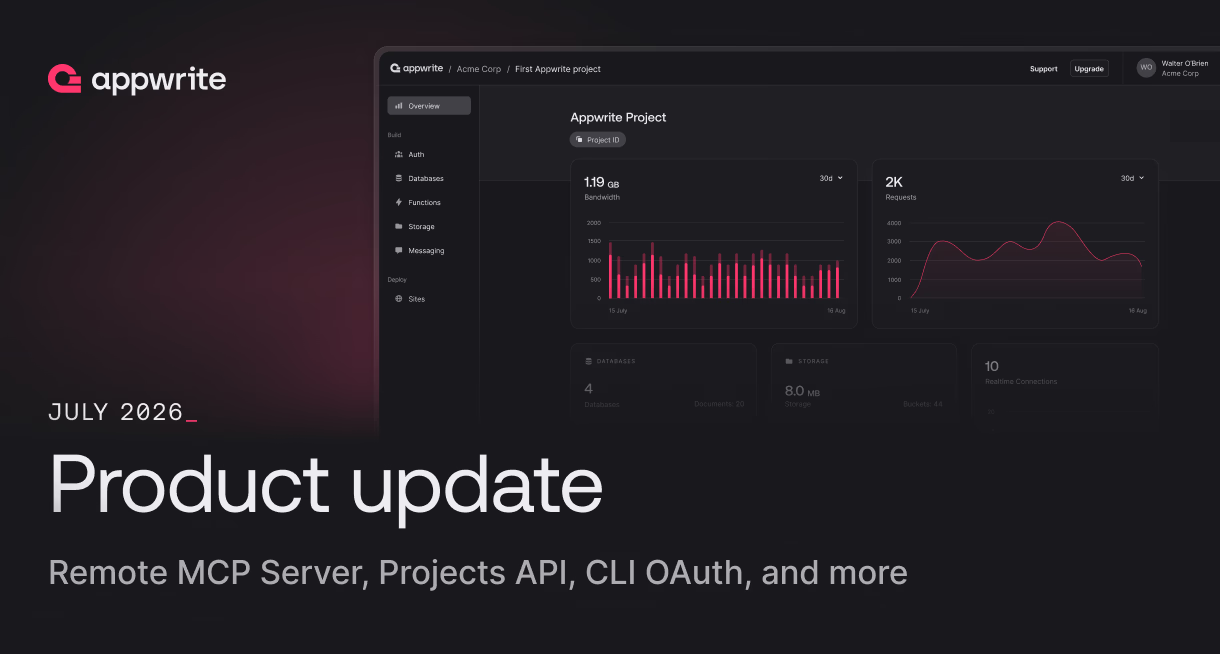
See what's new in Appwrite with the hosted remote MCP server Projects API OAuth Device Authorization and Appwrite 1.9.6.

GPT-5.6 Luna is now 80 percent cheaper and Terra 20 percent cheaper from July 30. Here is the new API pricing plus what Fast mode replaces for Sol users.

Grok Voice Think Fast 2.0 hits 0.70s time to first audio, 82.9% speech-to-speech quality, and $0.08 per minute. See the benchmarks, pricing, and migration path.

Grok Build Mode lets you describe an app and watch Grok build it in chat, then publish it to a link. Here is how the Early Beta works and who can use it.

Claude Opus 5 lands with near Fable 5 intelligence at half the price, state-of-the-art agentic coding, and less restrictive cyber classifiers.

Health in ChatGPT lets US users securely connect medical records and Apple Health so ChatGPT can reason over their real data. Here is how it works, the privacy model behind it, and what it means for developers building health apps.

OpenAI Presence is a proven enterprise product for putting AI agents to work across customer and internal workflows. Here's how it works, the results OpenAI reports, and what it means for developers building agents.

Discover the best image formats for websites in 2026. Compare AVIF, WebP, JPEG, PNG, and SVG, and learn how to serve them with fallbacks for speed and SEO.

GPT-Red uses adversarial self-play to find prompt injection failures at scale. See OpenAI's results, training loop, and lessons for agent builders.

Grok Build is now open source under Apache 2.0, giving developers an inspectable coding-agent harness, local inference, and privacy controls.

Anthropic just introduced Claude for Teachers, giving verified US K-12 educators free Claude, teaching skills, and aligned curricula.
GPT-5.6 is OpenAI's new frontier model family with Sol, Terra, and Luna. See how it performs on coding and agents, plus what it means for developers.
Catch up on Appwrite’s June product updates, including the React library, self-serve BAA, Password strength for Auth, Claude Code support, and resources.
Claude Fable 5 is back after export controls lifted, now with an upgraded jailbreak safety classifier and deeper US government collaboration.

Claude Sonnet 5 is Anthropic's most agentic Sonnet model, nearing Opus 4.8 performance at lower prices. See benchmarks, pricing, and how to build on Appwrite.
SpaceX acquires Cursor for $60 billion days after its IPO. Here is what the deal means for developers building on AI coding tools

Claude Fable 5 access is suspended after a US government export control directive. Here's what happened to Anthropic's flagship model and why it matters.
Get a full recap of everything shipped across Appwrite in May, including Presences API, Rust runtime, 7x faster Storage uploads, database improvements, Auth email policies, deployment updates, and AI tooling.
Anthropic launched Claude Fable 5 and Mythos 5, its first Mythos-class models. See benchmarks, safeguards, pricing, and how to build agents on Appwrite.

Build a practical AI productivity stack for developers with Linear, Cursor, Claude, ChatGPT, and Perplexity to reduce friction and ship faster.
Explore Claude Opus 4.8, including fast mode, dynamic workflows, effort control, pricing, benchmarks, and how to build agentic apps with Appwrite.
Explore 15 free hosting platforms in 2026, compare what each free tier offers, and learn when Appwrite is the better path for building, hosting, and scaling full stack apps without stitching services together.
Learn the biggest vibe coding trends shaping 2026, from AI coding agents and context engineering to backend infrastructure built for faster software development.

Anthropic launched Claude for Small Business with 15 workflows, connectors for QuickBooks, PayPal, HubSpot, Canva, Docusign, and free AI training.
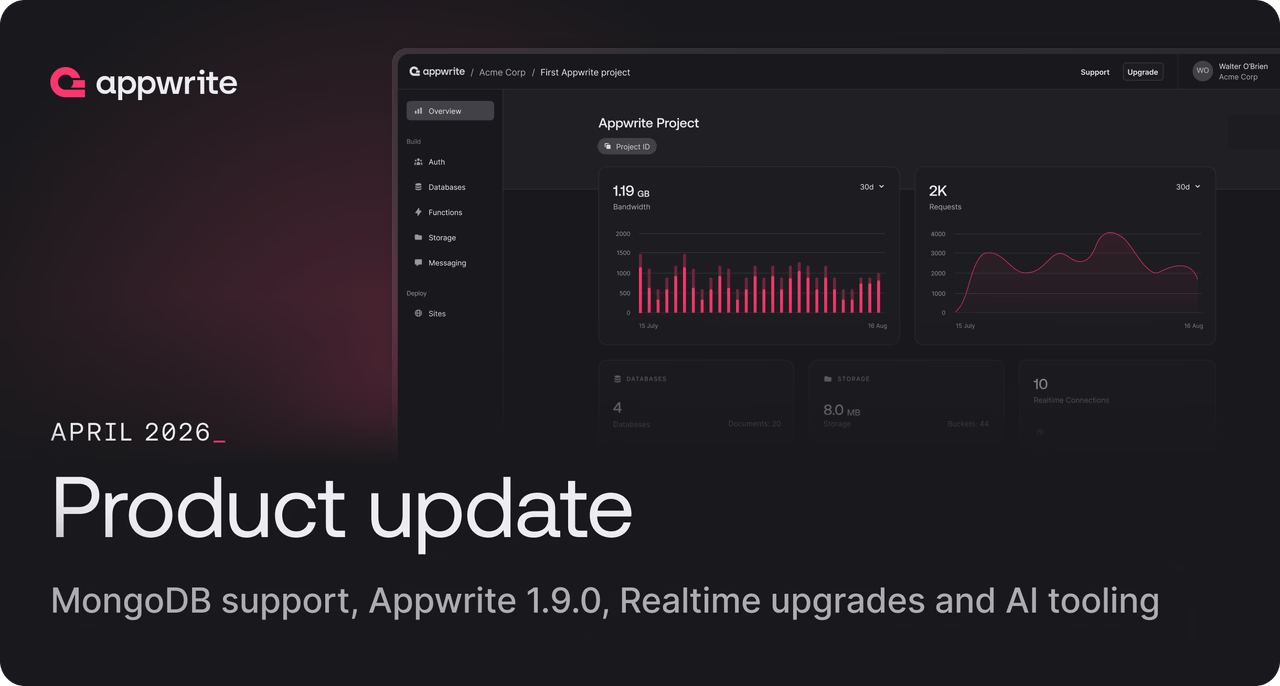
Get a full recap of everything shipped across Appwrite in April, including the official MongoDB partnership in Appwrite 1.9.0, Terraform support, Realtime upgrades, performance improvements, new infrastructure APIs, and deeper AI integrations for Claude Code, Cursor, and MCP workflows.
Compare Claude, GPT, and Gemini for developers. See how they perform across coding, debugging, UI generation, multimodal tasks, and more.
Discover 6 practical AI techniques developers are using to work faster, debug smarter, and ship better code. Learn how to turn AI into a real productivity multiplier in your development workflow.
Compare Appwrite vs Neon for AI app backends. Neon owns Postgres for agents; Appwrite gives you a complete app backend with Auth, storage, MCP, and more.
A look at everything publicly known about Claude Mythos, why Anthropic has held it back, and what the timeline for a public release might actually look like.
Appwrite vs Firebase AI: compare MCP, SDK breadth, Auth, databases, Storage, Functions, Sites, and self-hosting for AI-assisted development.
Discover the top 3 Claude features most developers overlook. Learn how to use them to improve prompts, streamline workflows, and get better results from Claude.
Using AI but not getting great results? These 7 prompts help developers get clearer, more accurate outputs and actually make AI useful day to day.
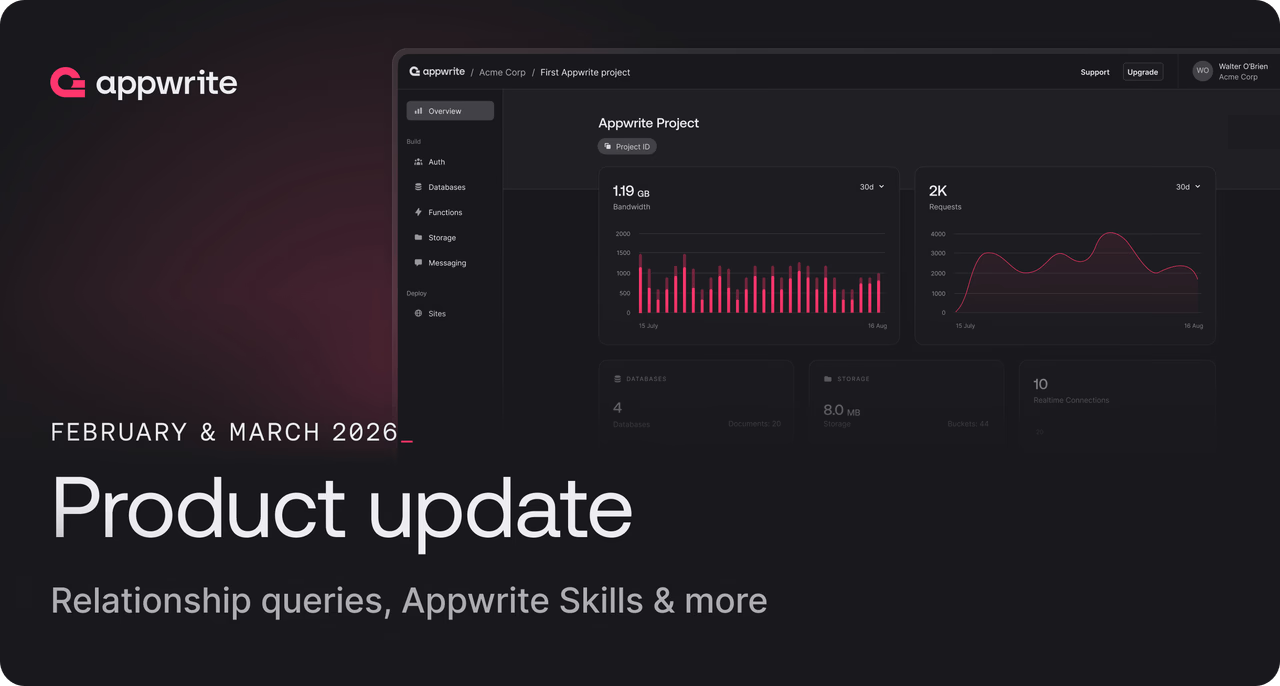
Get a full recap of features, improvements, and tools we shipped across Databases, Realtime, and AI in February and March.
Claude Design is changing how teams design products. Here's a look at what it replaces, what it doesn't, and what designers get back.

Master Claude with 5 powerful hacks that improve your prompts, workflows, and outputs. Learn how to use briefs, projects, artifacts, and more to get better results fast.
Compare self-hosted and managed backends to understand tradeoffs in control, cost, and speed, and choose the right approach with Appwrite.
Ship your side project faster by skipping backend setup. Build your MVP in days with authentication, databases, and APIs ready out of the box.
Common mistakes developers make when building with Appwrite and how to fix them before they cause security, performance, or scaling issues.