Announcing OAuth Device Authorization for the Appwrite CLI: Log in from your browser_
The Appwrite CLI now signs you in through your browser. Confirm a device code, review permissions, and authorize, without typing credentials into your terminal.

Signing in to a CLI should not mean typing your account password into a terminal prompt. Your identity already lives in your browser, and that is where authentication should happen.
Today, we are announcing OAuth Device Authorization for the Appwrite CLI. Running appwrite login now hands the sign-in process to your browser, so you can authenticate the CLI with the account session you already trust.
How it works
The new flow follows the OAuth 2.0 device authorization pattern. Run appwrite login, and the CLI displays a device code and a URL, then waits for approval.
Press Enter to open the URL, or copy it into any browser. Confirm the code on the page matches the one in your terminal and click Continue.
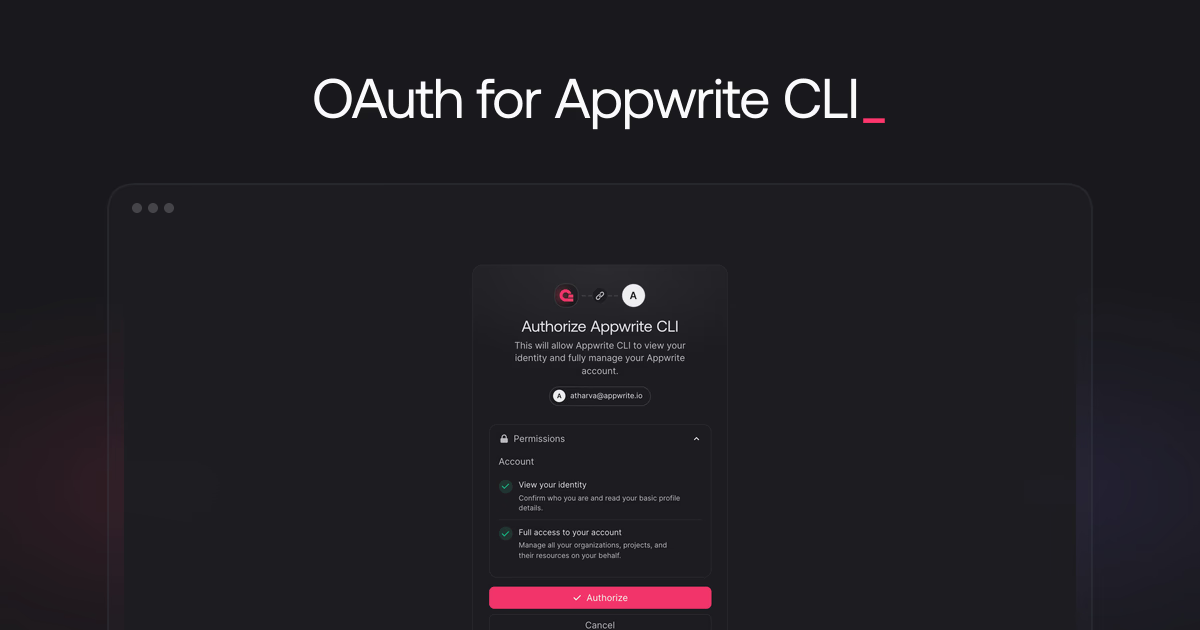
Review the permissions the CLI requests and click Authorize. Once approved, the CLI detects the authorization and finishes signing you in.
Consent you can see
Before the CLI can act on your behalf, the browser shows you exactly what access you are granting: viewing your identity and fully managing your Appwrite account.
Authorization is also reversible. You can revoke the CLI's access anytime from your Appwrite account settings.
Get started
Update the Appwrite CLI to the latest version and run:
appwrite login
The CLI installation guide walks through every step with screenshots.
More resources
OAuth Device Authorization is the new login flow for the Appwrite CLI, based on the OAuth 2.0 device authorization pattern. Instead of prompting for your credentials in the terminal, the CLI shows a code and a URL. You confirm the code in your browser, review the requested permissions, and authorize the CLI with your Appwrite account.
The same command as before: appwrite login. If you use a self-hosted instance, add the --endpoint flag with your instance URL. The only thing that changes is what happens after you run it.
The authorization screen lists the exact access you grant: viewing your identity and fully managing your Appwrite account on your behalf. You review and approve these permissions in the browser before the CLI can act.
You can revoke access anytime from your Appwrite account settings. Once revoked, the CLI can no longer act on your behalf until you authorize it again.
No. Non-interactive mode, which authenticates with an API key through appwrite client, is unchanged and remains the recommended approach for CI and scripting.